
In Common
Issue Four, April 2025

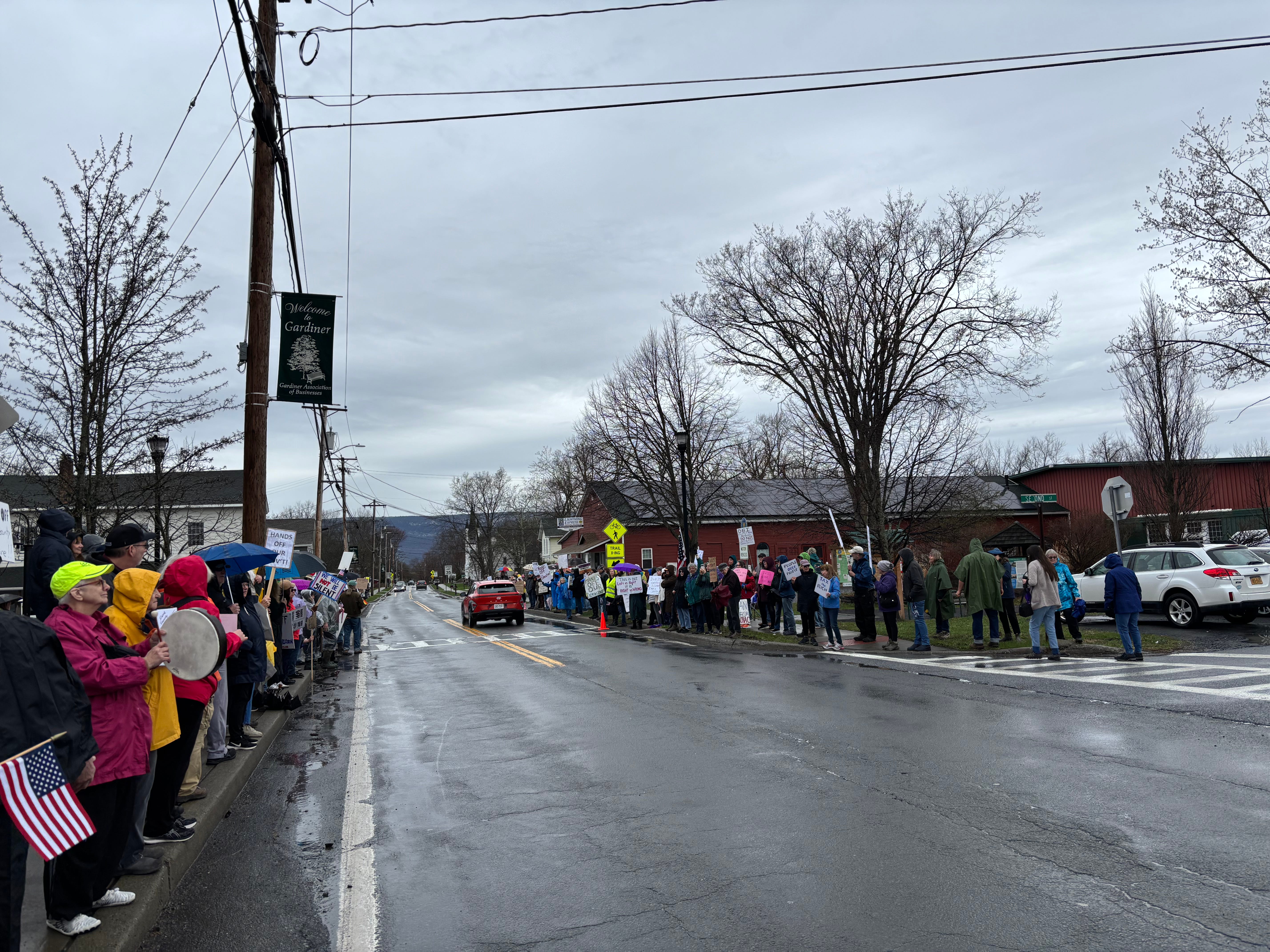
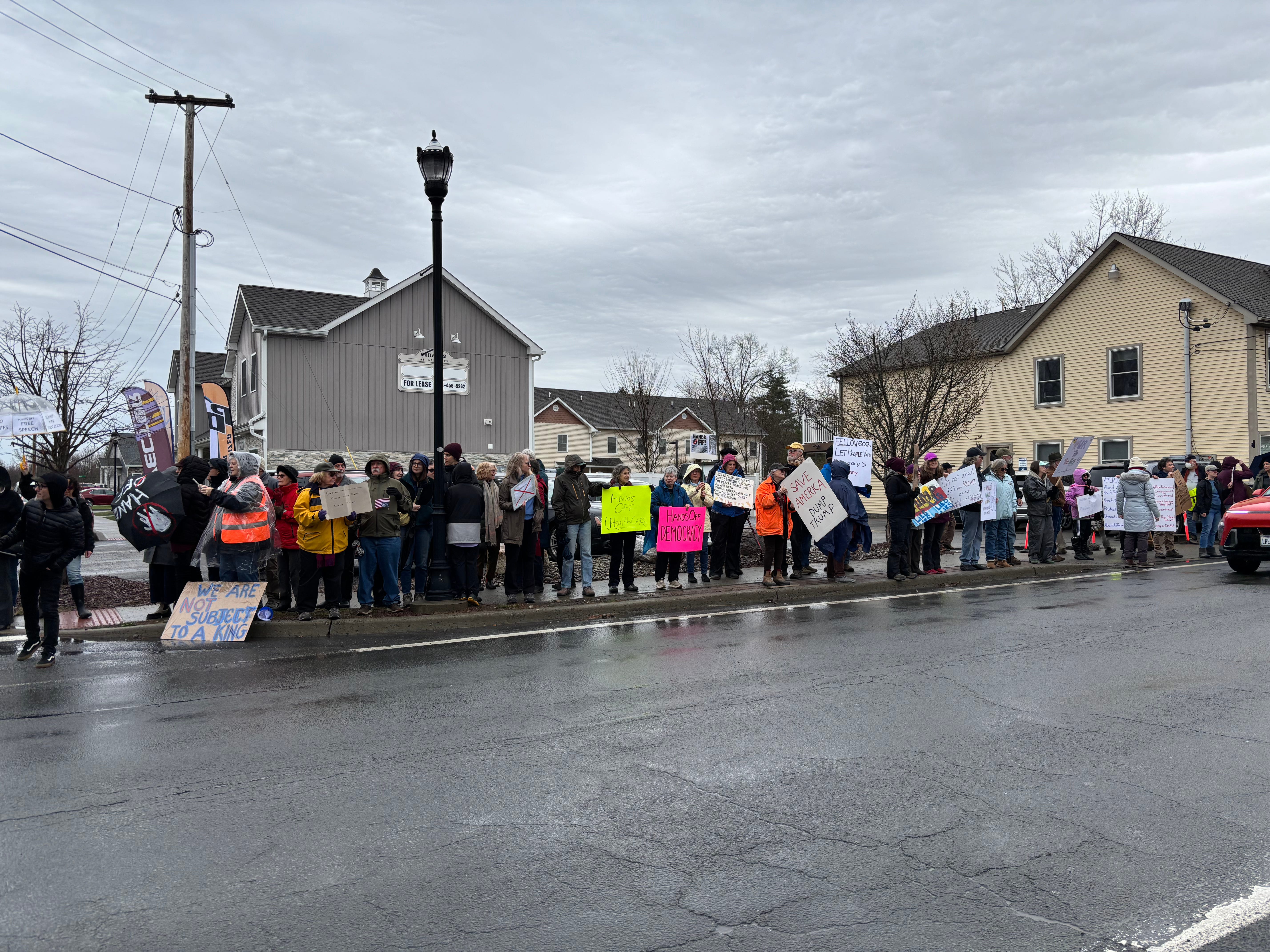
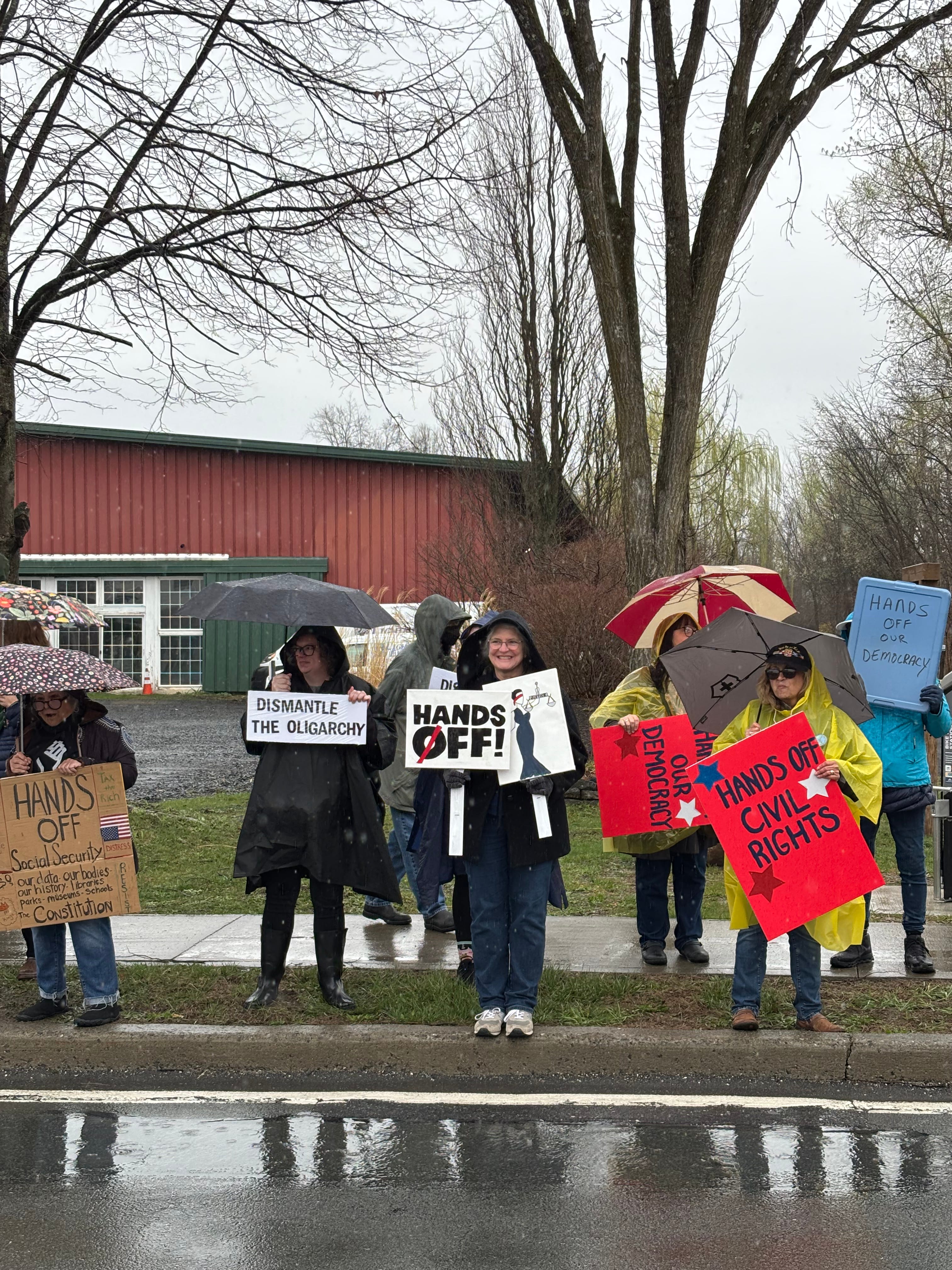
Americans gathered across the country on April 5 for the Hands Off! national day of action. I attended a crowded demonstration in the small town of Gardiner, NY.
In Common
The very brief history of the center and left of modern Western political theory goes something like this: liberalism insisted on human equality but got taken over by capitalism and imperialism; socialism insisted on human equity but got taken over by authoritarianism.
One of the best ideas to come from the tradition of liberal political theory is the belief in equality among human beings. A belief in equality demands an expansion of one’s circle of moral consideration; it’s not only myself, my group, and my nation who matter but all people.
However, liberalism has struggled to take this belief seriously. On a theoretical level, the value of equality has collided with the value most liberals place on property rights. Historically, many (though not all) liberals have made common cause with capitalism and imperialism, subordinating the principle of equality to a reality of economic and social inequality. It was, of course, a slaveholder who wrote in this country’s Declaration of Independence that “all men are created equal.”
One way of thinking about socialism is that it emerges from the same principle of equality as liberalism, but tries to put this principle into practice more effectively by taking into consideration the structural factors that prevent equality from being a reality. By opposing capitalism and imperialism, socialists strive to create not only a formally equal but concretely equitable world. Economic inequality is seen by socialists as a barrier to real equality, and the socialist tradition at its best also strives to eliminate the structural roots of racism, sexism, homophobia, and other forms of oppression. The authoritarian turn that socialist states have usually taken is a serious problem for socialists to reckon with, but I don’t think the principle of equity is to blame.
Socialists differ on the philosophical reasons for why their political project is worth pursuing, but perhaps the strongest reason is accomplishing the liberal goals that liberalism itself has not been able to realize. If the world is to be truly equal, it actually has to be equitable.
Equity requires taking into account both objective and socially constructed differences between people in order for society to begin treating marginalized groups fairly. But these differences do not contradict a deeper commonality. Indeed, I think it is this belief in human commonality that underpins egalitarianism. This is the humanism at the core of progressive politics.
However, humanism leaves something out: non-human life. Western philosophy often frames the paramount philosophical question as: “what does it mean to be human?” But it is not clear to me why that question is more fundamental than “what does it mean to be an animal?” or, even broader, “what does it mean to be alive?”
Western philosophy has long been at pains to separate the human from the non-human. Crispin Sartwell writes in a New York Times opinion article, “If one were to read through the prefaces and first paragraphs of the canonical works of Western philosophy, one might assume the discipline’s primary question to be this: What makes us humans so much better than all the other animals?”
Sartwell identifies two key political problems that have stemmed from Western philosophy’s devaluing of animal life. First, because we see ourselves as superior, we treat non-human animals and the natural environment poorly. Second, the hierarchy established between humans and non-humans is carried over to create a hierarchy among humans. Sartwell writes, “Some humans, according to this line of thinking, are self-conscious, rational and free, and some are driven by beastly desires.” This view creates the justification for forms of discrimination such as racism.
Progressives reject the idea that humans come in superior and inferior forms. But it may be that the longstanding philosophical project to establish human superiority over non-human animals complicates the political project of equality among humans. If we can undercut the default understanding that humans are fundamentally superior to other animals, it is easier to discredit once and for all the idea that some humans have more value than others.
Equality and equity are probably not the right concepts to apply to our relationship with non-human animals. But we can find political direction by utilizing concepts such as respect, non-harming, and non-domination.
Surely, there are some significant things that make humans unique. We are probably the only animals that think in abstract concepts (and you’re doing it right now by reading this). We are the only animals to develop technologies that have transformed the world both for humans and other living beings. And no other animal has reached the level of power and control over other animals and—to some extent—the natural environment that humans have reached. But our conceptual thinking, technological prowess, and unprecedented power does not mean that we have stopped being animals. We have not removed ourselves from the web of life.
As human-exceptionalist as Western philosophy has been, one of the strongest arguments for extending moral consideration to animals comes from the English Utilitarian philosopher Jeremy Bentham. Bentham writes, in An Introduction to the Principles of Morals and Legislation, “The question is not, Can they reason? nor, Can they talk? but, Can they suffer?” (italics in original.) If animals and humans suffer equally, then we have a responsibility to refrain, as much as possible, from causing either to suffer.
Suffering is not emphasized much in Western philosophy, but it is the central problem of Buddhism. For Buddhists, all sentient beings experience suffering, so it can be seen as a commonality between us. However, it is generally believed that an animal rebirth is spiritually inferior to a human rebirth because only humans can transcend suffering by achieving nirvana. The Buddhist attitude toward animals is complicated and I am still trying to grapple with it as a student of Buddhism and a proponent of animal welfare (this is an interesting piece focused on Tibetan Buddhism’s understanding of animals). It is not only Western philosophy that draws distinctions between humans and non-human animals. However, Buddhists take the suffering of animals seriously and believe that the principle of non-harming extends to animals as well as humans.
While there are strong philosophical reasons to avoid causing animals to suffer, human systems cause immense animal suffering nonetheless. The impact of climate change and habitat destruction can be measured in the decline in the number of individual animals and animal species, but also in animal suffering. This suffering is experienced, for example, by the right whale stressed by the noise of cargo ships; the cow or chicken imprisoned in a factory farm; and the reptile or mammal caught in a climate change-fueled fire. Addressing the moral catastrophe of animal suffering caused by human systems requires recognizing our own suffering in the suffering of animals.
The differences between humans and non-human animals should not be glossed over, but they do not justify a politics of disregard and domination. What matters is a shared suffering, and indeed a shared planet. As Sartwell puts it in his New York Times article, “maybe we’ve been too focused on the differences for too long. Maybe we should emphasize what all us animals have in common.”

What’s Out There
Content I share does not necessarily reflect my own opinions.
HIV and AIDS deaths could increase globally amid US aid freeze, UN says (Al Jazeera)
“There could be 2,000 new HIV infections a day across the world and a tenfold increase in related deaths, possibly in the millions in the years to come, if funding frozen by the United States is not restored or replaced, the United Nations AIDS agency has said.”
This Week in Democracy (Zeteo)
The left-leaning news and opinion website Zeteo is keeping a weekly log of “the Trump administration’s attacks on the American democratic and constitutional order.”
A Woodland Walk can be an Act of Worship by Hannah Idil, Good Chat
“…every leaf, every bug, every drop of water, every breath is a sign of Allah’s mercy and… we must extend the same mercy to His creation. The Earth is an amanah (a trust), and therefore our responsibility.”
Video: How the AfD attempts to whitewash fascism (Barely Informed)
On the not-so-subtle fascism of the Alternative for Germany party, which placed second in this year’s German election.
Want to reply to something in this issue? Have something to say about another topic? Send me a letter to be published in the next newsletter! Please email schuylerkempton@protonmail.com
Letters are published at my discretion.
If you are not yet an Ecopolitics subscriber, click here to join the email list for free
If you’re already a subscriber, please share Ecopolitics with a friend!
Consider supporting me on Patreon for $5/month
Follow me on Bluesky
Thanks for this lucid explanation of liberalism and socialism and the limits to the humanism upon which both are based. Given the authoritarian trend in US politics, it's a particularly important time to consider what we all--the human and natural worlds--have in common.
Also thanks for the photos of the Hands-Off demonstration in Gardiner, NY! Let's hope the scene was duplicated in small towns across America. It's encouraging that big city demonstrations made the first page of the NY Times and Washington Post (if somewhat discouraging that they were not headlines).